Enemies of stored rubber
- Heat accelerates ageing.
- Light, especially ultraviolet, cracks surfaces.
- Ozone from electric motors and equipment cracks stretched rubber.
- Oxygen hardens rubber slowly.
- Humidity affects some polymers and metal inserts.
- Contact with oils, solvents, metals (copper, manganese) and PVC causes damage.
- Deformation: hanging rings on nails creates permanent set.
Recommended conditions (ISO 2230 and similar)
| Factor | Guide |
|---|---|
| Temperature | 5 to 25 degrees C, never above 30, away from heaters |
| Humidity | Below 65 percent relative |
| Light | Dark, opaque packaging |
| Ozone | Away from sparking equipment and UV lamps |
| Contact | Original sealed bags, lying flat or loosely |
Shelf-life guide
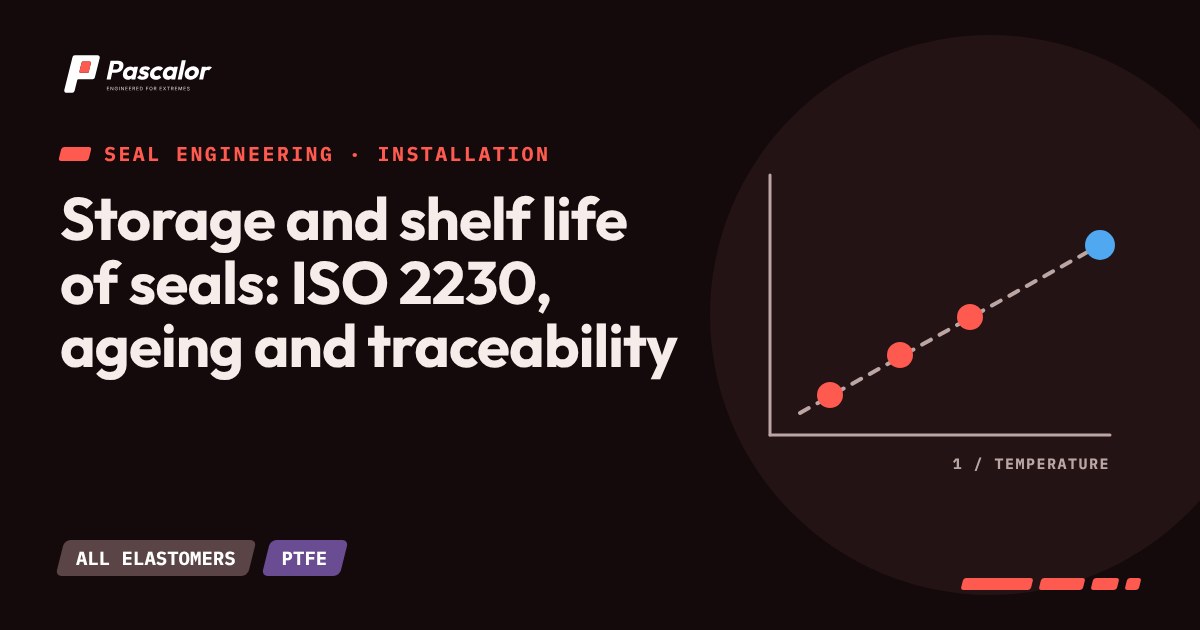
ISO 2230 and DIN 7716 suggest typical storage periods before use. Approximate values: NBR and similar about 5 years, EPDM and silicone up to 7 years, FKM and FFKM up to 10 years, natural rubber about 2 years. These are guidelines for compounds stored in good conditions, and some customers set shorter limits.
PTFE does not age in storage, but machined parts can distort if stored under load and need clean wrapping.
Managing stock
- Label cure date or manufacture date and lot.
- Use first in, first out.
- Re-inspect and re-test hardness before use of old stock.
- Keep the compound batch certificate with the part.
- Quarantine parts that were exposed to heat or chemicals.
Packaging
Heat-sealed polyethylene bags with an oxygen barrier for long storage. Desiccant for humidity-sensitive items. Date-label every bag.
Shipping
Avoid hot containers in summer. For critical or long-lead orders, use insulated packaging and temperature loggers.
About this article. It is original writing prepared from public sources, standards and general industry practice. It is not a copy of any book or standard and it is not engineering advice. Confirm values against the current edition of the standard and test in your own application. Only analyse material you own or are entitled to analyse.