

PTFE guides
PTFE guides
Virgin, modified and filled PTFE (glass, carbon, graphite, bronze, MoS2): properties, processing, wear, seals, gaskets, chemistry, regulation and selection. Original technical articles for engineers and buyers.
Virgin, modified (TFM) and reprocessed PTFE: what the difference means
Not all unfilled PTFE is the same. Virgin granular, modified PTFE and reprocessed or regrind each behave differently in sealing, food, pharma and electrical service.
Read →
Typical properties of virgin PTFE, with the reasons behind the numbers
A reference table of typical virgin PTFE properties and how each number affects seal, bearing and gasket design. Values are typical; always use the supplier datasheet for design.
Read →
Standards and tests for PTFE materials and parts
Which ASTM and ISO documents define PTFE resins and moulded shapes, which tests prove quality, and what to ask on a certificate.
Read →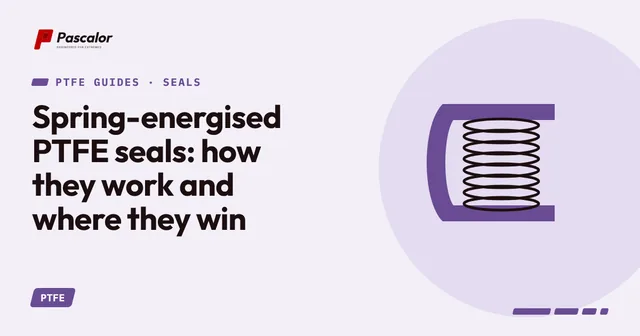
Spring-energised PTFE seals: how they work and where they win
A PTFE jacket with a metal spring inside seals across a huge temperature and chemical range where rubber cannot go. Learn the geometry, the spring types and the design checks.
Read →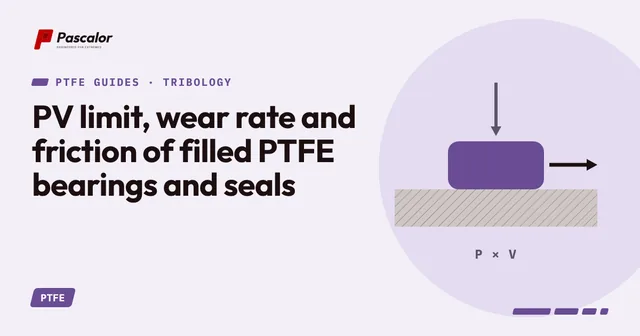
PV limit, wear rate and friction of filled PTFE bearings and seals
How pressure times velocity limits a sliding PTFE part, how wear rate is estimated and why friction falls with load. Includes the working rules designers use before testing.
Read →
PTFE-encapsulated and FEP/PFA-jacketed O-rings
A thin fluoropolymer skin over a silicone or FKM core gives rubber-like elasticity with PTFE-like chemical resistance. Learn the limits: higher cost, stiffness and permeation caveats.
Read →
PTFE, PFA, FEP, ETFE and PVDF compared
The fluoropolymer family compared on temperature, melt-processability, chemical range, mechanical strength and typical sealing or lining use.
Read →
PTFE seal or elastomer seal? A decision guide
Elastomers seal by springing back. PTFE seals by conforming and by being pushed. Compare them on temperature, chemistry, friction, elasticity, cost and leak rate, and see when to combine them.
Read →
PTFE in HPHT and cryogenic (HPLT) service
How PTFE and filled PTFE behave at the two ends of the temperature scale, what to add for pressure, and where an elastomer still needs to sit behind the PTFE.
Read →
PTFE gaskets: virgin, filled, expanded and envelope types
PTFE gaskets resist almost every chemical, but cold flow and creep relax the bolt load. Compare skived, filled, expanded (ePTFE) and envelope gaskets and choose the right style.
Read →
PTFE for food, pharmaceutical and high-purity service
Which PTFE grades can be used in contact with food, drugs and ultra-pure chemicals, what approvals exist and how to avoid contamination from fillers, lubricants and machining.
Read →
PTFE explained: structure, properties and why it behaves the way it does
Polytetrafluoroethylene is a long chain of carbon atoms wrapped in fluorine. That one fact explains its chemical resistance, its slipperiness, its heat tolerance and its weaknesses.
Read →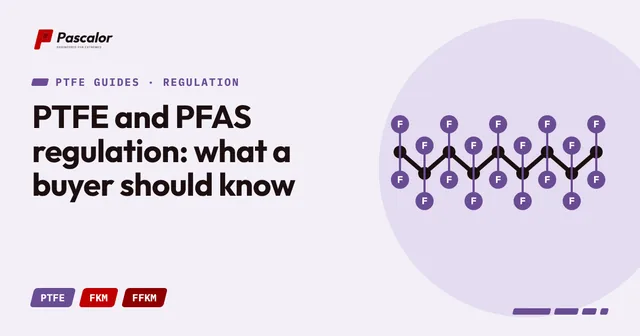
PTFE and PFAS regulation: what a buyer should know
Fluoropolymers such as PTFE sit inside the broad PFAS definition under discussion in the EU and elsewhere. A plain account of the risk, the exemptions debate and how to plan around it.
Read →
MoS2-filled PTFE: dry, vacuum and clean-sliding service
Molybdenum disulphide improves hardness and wear and lowers friction, especially in dry or vacuum conditions. It is usually added at a few percent to glass, bronze or carbon grades.
Read →
Machining PTFE parts: tolerances, temperature and tooling
PTFE is soft, slippery, springy and thermally unstable in size. Practical guidance on turning, milling, holding, measuring and tolerance setting.
Read →
How PTFE parts are made: moulding, sintering, ram extrusion, skiving and paste
PTFE cannot be melt-processed like most plastics. A walk through the main manufacturing routes and what each one means for part quality, size and cost.
Read →
Graphite-filled PTFE: the lowest friction filled grade and where it fits
Graphite lowers friction and is gentle on mating surfaces. It is the choice when counterfaces are soft, or when sliding speed is moderate and the system is lubricated by transfer film.
Read →
Glass-filled PTFE: wear resistance, stiffness and the traps
Short glass fibre makes PTFE stiffer and far more wear resistant, with much less creep. It also scratches soft mating surfaces and is attacked by hydrofluoric acid and strong alkalis.
Read →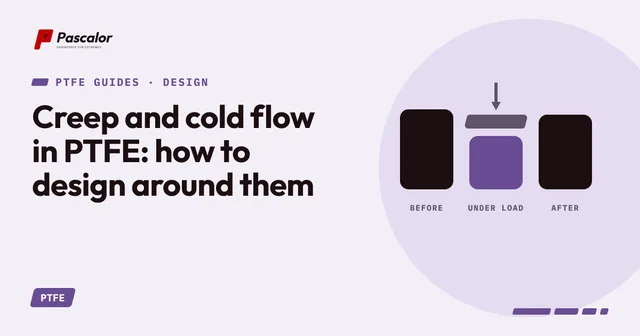
Creep and cold flow in PTFE: how to design around them
PTFE deforms slowly under steady load and recovers only partly. Learn where it bites in gaskets, bolted joints and seals, and what to do about it.
Read →
Choosing a filled PTFE grade: a decision table
A practical comparison of virgin, glass, carbon, graphite, bronze and MoS2 filled PTFE across wear, creep, chemistry, counterface, conductivity and food use.
Read →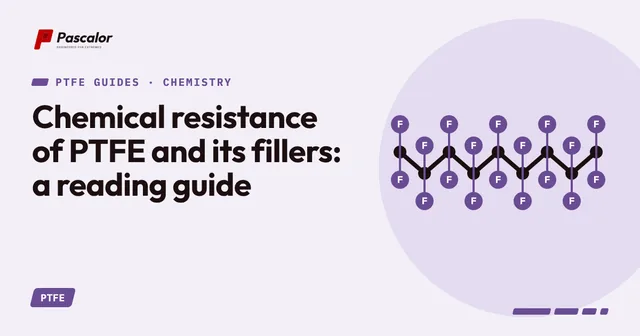
Chemical resistance of PTFE and its fillers: a reading guide
PTFE resists nearly everything. The filler and the temperature often do not. A guide to the few chemicals that do attack PTFE and how to check each filler.
Read →
Carbon-filled PTFE: strength, heat conduction and chemical range
Carbon fillers give PTFE high compressive strength, better thermal conductivity and chemical resistance wider than glass. They suit steam, water, and hard counterfaces.
Read →
Bronze-filled PTFE: load capacity and heat conduction, with chemical limits
Bronze powder gives PTFE the highest load capacity and thermal conductivity of the common fillers. It is dense, expensive and attacked by many acids, alkalis, steam and seawater.
Read →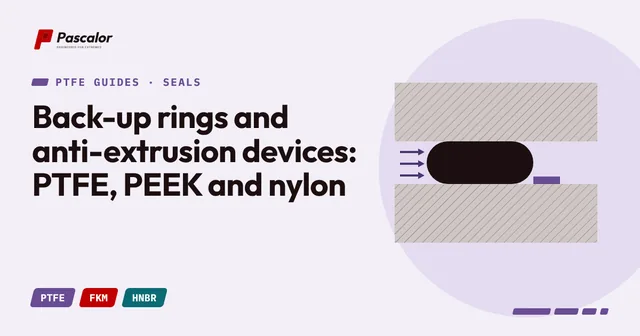
Back-up rings and anti-extrusion devices: PTFE, PEEK and nylon
At high pressure rubber extrudes into the clearance gap. Back-up rings stop it. How to choose geometry and material, and where PTFE is not enough.
Read →Nothing matches that search.