A rubber-metal bonded part is a system, not a material. The rubber is one component; the metal preparation, primer and cover coat are others. A failure is as likely at the bond as in the rubber.
Separate the components
Cut or strip the rubber from the metal with a sharp blade or a controlled solvent step. Keep the metal surface and the adhesive residue that stays on it. Analyse them separately: the rubber for composition, the metal for coating and treatment.
Rubber analysis
The rubber itself follows the normal steps. Typical polymers are NR for good dynamic properties, SBR/BR blends, CR for oil and weather resistance and NBR where oil is present. High loading of reinforcing black and tough antidegradant packages are common, because the part fatigues in service.
The bond layer
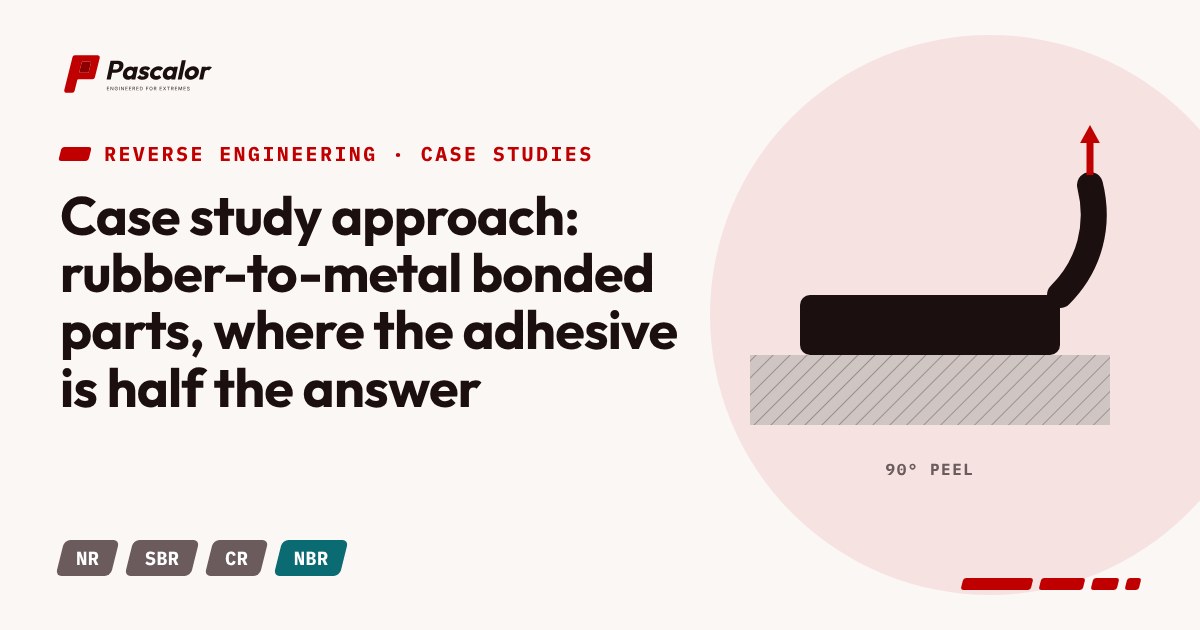
- Visual: after a peel test, the failure mode tells you a lot. Rubber tear (rubber left on both surfaces) means the bond is stronger than the rubber. Failure at the primer, at the cover coat or at the metal is an adhesion problem.
- Spectroscopy: infrared and surface techniques identify the adhesive chemistry as a phenolic, chlorinated rubber or other family.
- Metal surface: the treatment (phosphate, grit blast, zinc, chromate-free pre-treatments) affects adhesion strongly.
What reverse engineering cannot give
The application process matters: surface cleanliness, primer thickness, flash-off time and cure temperature are not recoverable from the part. Adhesive supplier formulations are proprietary and can only be described by family.
What to match
Dynamic stiffness, fatigue life, bond strength after ageing in the service fluid and temperature, and failure mode in the peel test. Match the whole system in tests, and expect to work with the adhesive supplier.