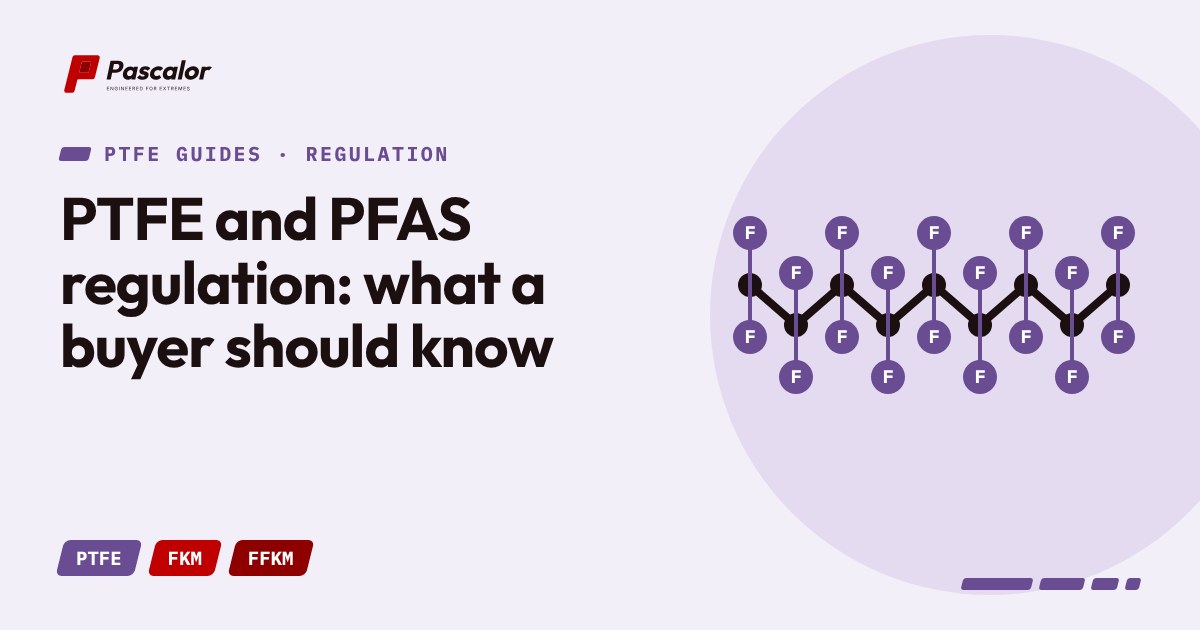
PFAS (per- and polyfluoroalkyl substances) is a very large family of chemicals. Fluoropolymers such as PTFE, FEP and PFA, and fluoroelastomers such as FKM and FFKM, fall inside the wide definition used in some regulatory proposals, even though their hazard profile differs greatly from the small mobile PFAS compounds of main concern.
Where things stand (as of writing; check current status)
- A broad restriction proposal on PFAS has been under review in the European Union, with consultation and scientific opinion rounds running for several years. The final scope, derogations and timelines may change.
- Some US states and other jurisdictions restrict PFAS in specific consumer products or require reporting.
- Industry bodies argue that fluoropolymers are stable, non-bioaccumulative polymers essential for medical, semiconductor, energy and aerospace uses, and seek time-limited exemptions.
- Production aids and impurities (such as legacy surfactants) are regulated separately and have been phased out by many producers.
What this means for a supplier and a buyer
- Regulatory risk is real but uneven. Safety-critical and no-alternative uses are more likely to receive derogations. General consumer uses are more exposed.
- Ask for documentation. Declare resin supplier, polymerisation aid status, and substance declarations (REACH, RoHS, TSCA, PFAS statements).
- Keep alternatives mapped. For sealing: PEEK, polyimide, UHMWPE and filled PE grades cover some low-temperature or benign-fluid cases; no non-fluorinated polymer matches PTFE or FFKM across the full chemical and temperature range.
- Do not oversell. Do not claim PTFE or FKM are PFAS-free. State precisely what the material is.
- Prepare for change. Hold records of where each fluoropolymer grade is used so a future restriction can be handled quickly.
For a company building a fluoropolymer line
A diversified portfolio of elastomers (HNBR, EPDM, silicone) and engineering thermoplastics reduces exposure. Position fluoropolymers as the answer where nothing else survives, and be transparent about the regulatory outlook.
Where to look
The European Chemicals Agency publishes the PFAS restriction file and updates. National agencies and trade bodies publish guidance. This article is not legal advice; confirm the position with your regulatory adviser.