

Engineering library
Seal engineering library
Seal design, materials, standards, testing, failure analysis and applications: O-rings, PTFE seals, gaskets, packing, bonded parts, hydrogen, vacuum, cryogenic and oil and gas. Original guides.
Vacuum sealing and outgassing of elastomers
In vacuum, plasticiser, water and low-molecular species leave the rubber, contaminate the system and raise the base pressure. Choosing compounds, baking and cleaning.
Read →
Troubleshooting a leaking seal: a 12-step checklist
A structured way to find the cause of a leak without guessing: from the seal and the hardware to the fluid, the installation and the operating history.
Read →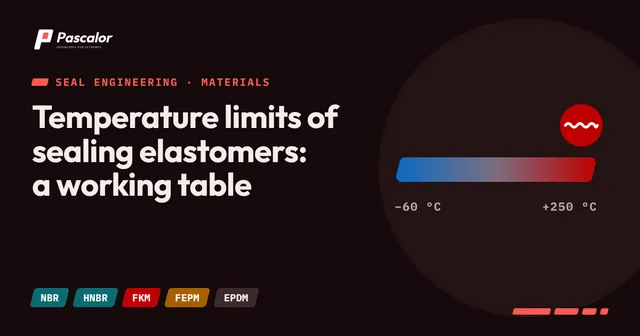
Temperature limits of sealing elastomers: a working table
Typical continuous and short-term temperature ranges for the common elastomers, with the reasons low and high ends differ and what to ask a supplier.
Read →
Surface finish, hardness and hardware for O-ring and PTFE seals
Roughness values, hardness and coating choices for static and dynamic sealing surfaces, with notes on measuring and specifying them.
Read →
Stress relaxation and sealing force: the property behind long-term leakage
Compression set shows where a seal ends up. Compression stress relaxation shows how the sealing force decays on the way. Why designers use it and how it is tested.
Read →
Storage and shelf life of seals: ISO 2230, ageing and traceability
How heat, light, ozone, oxygen, moisture and contact change stored rubber, the recommended storage limits and how to manage stock with first-in-first-out.
Read →
Shore A, IRHD and rubber hardness: how to choose for sealing
What hardness means, how it is measured, how it links to modulus and pressure capability, and why 70 Shore A is common but not always right.
Read →
Seals for food, pharmaceutical and biopharma equipment
Hygienic design, approvals (FDA, EU, USP Class VI), cleaning-in-place chemistry and the compounds that work, with their limits.
Read →
Sealing steam and hot water: EPDM, FEPM, FFKM and PTFE
Why steam destroys many rubbers, how peroxide cure and filler choice protect EPDM, and where FEPM, FFKM or PTFE-based seals are better.
Read →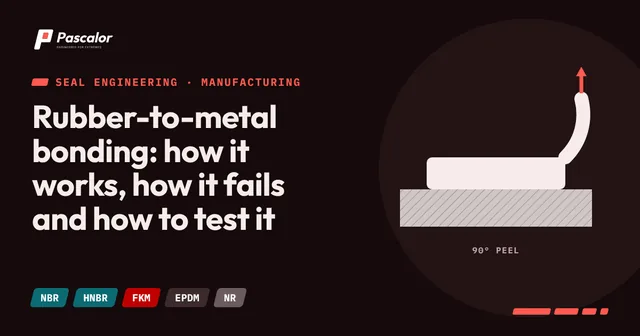
Rubber-to-metal bonding: how it works, how it fails and how to test it
Surface preparation, primers and adhesive systems, the failure modes seen in peel and shear tests, and design rules for bonded seals, bushes and mounts.
Read →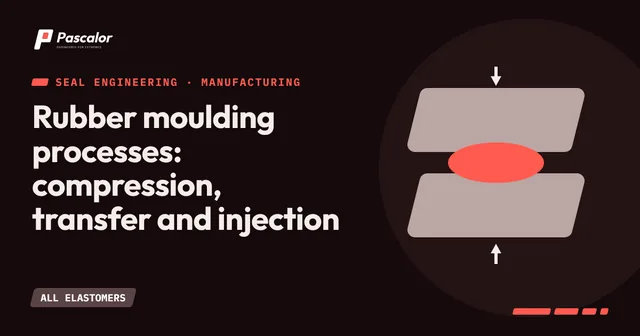
Rubber moulding processes: compression, transfer and injection
How each moulding route works, how it affects flash, density, tolerance and cost, and why post-cure is not optional for fluoroelastomers.
Read →
Reading chemical compatibility charts without being misled
Ratings are shorthand for swell, hardness change and degradation at one temperature. What the letters hide, and how to turn a chart into a test plan.
Read →
Radiation and nuclear service: how elastomers and PTFE age
Gamma and neutron radiation break chains or add crosslinks. Which sealing materials survive tens to thousands of kGy and how qualification is done.
Read →
Oil and gas elastomer qualification: NORSOK M-710, ISO 23936-2, API 6A and NACE TM0297
The main documents that qualify elastomers for sour gas, rapid gas decompression and long-term immersion, and what a buyer should ask of a compound supplier.
Read →
O-ring sizes and standards: AS568, ISO 3601, BS 1806 and JIS B2401
How standard O-ring sizes are named, how to find the right one and why inch, metric and Japanese series are not interchangeable.
Read →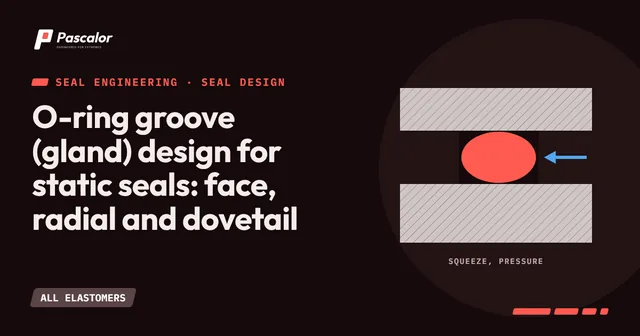
O-ring groove (gland) design for static seals: face, radial and dovetail
How to choose squeeze, groove width and depth, fill and clearance for flange and cover seals, with a worked example.
Read →
O-ring failure modes: a field guide to what the damage tells you
Compression set, extrusion, spiral failure, abrasion, thermal and chemical degradation, installation damage and explosive decompression: how to identify each and what to change.
Read →
Moulded rubber tolerances: ISO 3302-1 and what the classes mean
Rubber shrinks after moulding, flash and parting lines vary, and dimensions move with temperature. How to set realistic tolerances and where they matter.
Read →
Installing O-rings and seals correctly: lubricants, tools and common errors
Most field failures start at assembly. A short checklist for handling, lubricating, stretching and fitting seals without damaging them.
Read →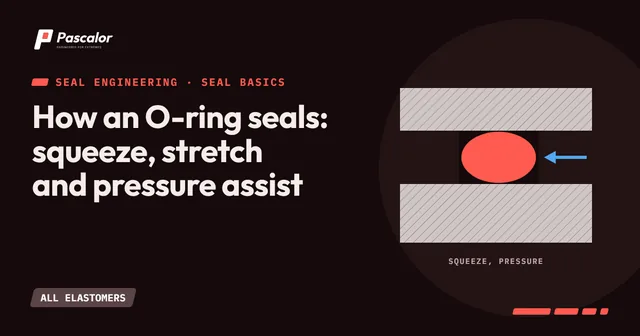
How an O-ring seals: squeeze, stretch and pressure assist
The physics of the simplest seal: initial squeeze creates contact stress, system pressure adds to it, and the groove controls where the rubber can go.
Read →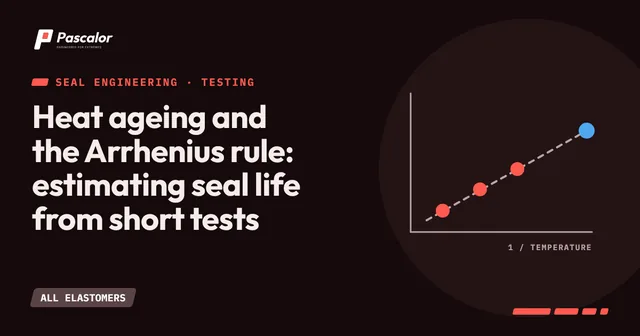
Heat ageing and the Arrhenius rule: estimating seal life from short tests
Rubber ageing speeds up with temperature in a predictable way. How to use oven-ageing data at several temperatures to estimate life at service temperature, and the limits of the method.
Read →
Gas permeation through seals: rubber versus PTFE, and why it matters
Gases dissolve in rubber and diffuse through it. Permeation sets a leak floor for gas seals and links to rapid gas decompression. How to estimate and reduce it.
Read →
Extrusion, nibbling and clearance gaps in O-ring seals
How rubber is forced into the gap under pressure, how to recognise the damage and how hardness, clearance and back-up rings control it.
Read →
Engineered thermoplastics in sealing: PEEK, polyimide, UHMWPE, PPS and nylon
Non-fluorinated polymers used for back-up rings, wear bands, valve seats and seal bodies, with temperature, chemical and counterface notes.
Read →
Elastomers for hydrogen service: what is different
Small molecule size, high pressure cycling and low temperatures make hydrogen demanding. A guide to material risks, testing and the standards under development.
Read →
Dynamic O-ring seals: reciprocating, rotary and oscillating
Moving seals fail by friction heat, wear and spiral twisting. The rules change: lower squeeze, finer finish, correct hardness and lubrication, and no rotary use for ordinary O-rings in many cases.
Read →
Cryogenic sealing: LNG, liquid nitrogen, oxygen and hydrogen
At cryogenic temperatures nearly every rubber is glassy. Learn what works, how contraction affects seals and what cleaning and safety rules apply.
Read →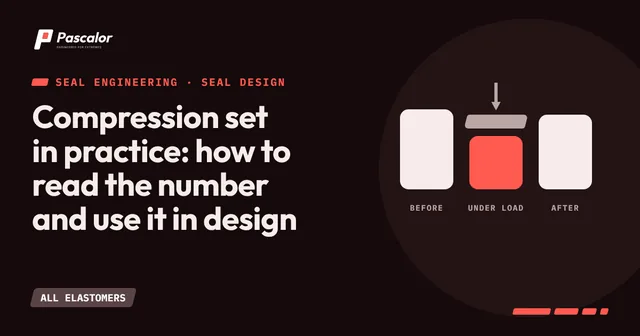
Compression set in practice: how to read the number and use it in design
Compression set measures how much a rubber fails to recover after being squeezed hot. How the test works, why numbers differ between labs and how to apply them to sealing life.
Read →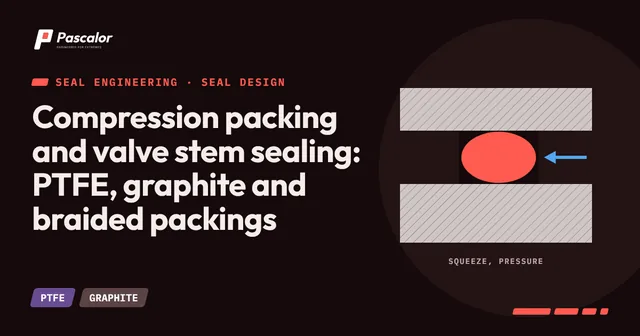
Compression packing and valve stem sealing: PTFE, graphite and braided packings
Packing rings are squeezed in a stuffing box to seal a moving stem or shaft. Material choices, emissions rules, gland load and common leakage problems.
Read →
Choosing an elastomer by fluid: a selection matrix
A practical first-pass table linking common service fluids to the elastomer families that usually work, the ones that fail and the questions to ask before ordering.
Read →
Certificates, approvals and traceability: what a serious seal buyer asks for
Certificate types (3.1, CoC), batch records, RoHS and REACH statements, quality systems and change control, and how to give buyers the paper trail they expect.
Read →
Bolted flange sealing: gasket stress, torque and relaxation
A flange joint seals when the gasket sees enough stress and keeps it. The basics of gasket stress, bolt torque, tightening patterns and why joints leak after the first heat cycle.
Read →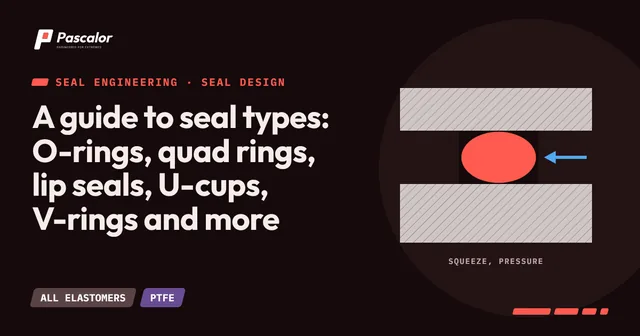
A guide to seal types: O-rings, quad rings, lip seals, U-cups, V-rings and more
What each common seal profile does best, where it is weak and which application it suits, in a single comparison.
Read →Nothing matches that search.